
The 614cast
Today’s tl;dr
☀️ Sunny, high in the lower 80s.

Forecast highlights
🕶️ False fall, after all
That nice, long span of near to below-average temperatures? We’re saying goodbye to it. Yes, it was too good to be true… the delightful fall weather isn’t here to stay quite yet.
Highs will be a bit above average coming up, even hitting the mid-80s this weekend.
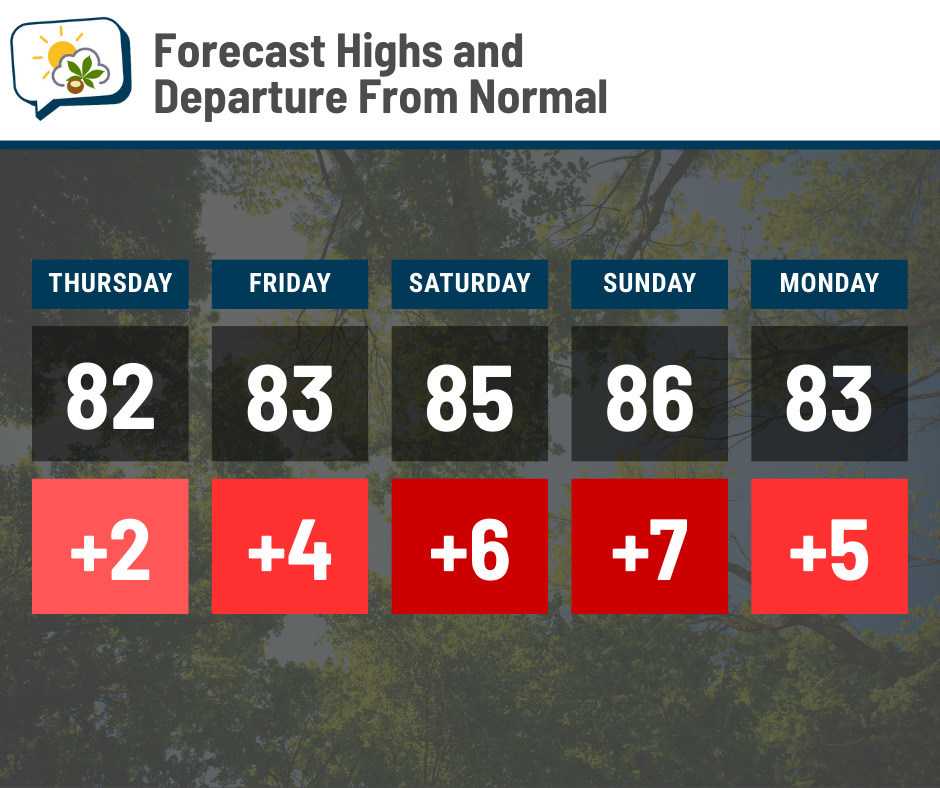
BUT!
Two things I want to point out. And to make it very official and clear, I’m using a numerical list.
-
It’ll be warm, but not exceptionally so. We’re not talking late-season 90s.
-
It’ll still be reasonably comfortable as far as humidity goes. Dew points in the 50s ain’t bad — a far cry from the mugginess we endured most of the summer.
That said, the relative warmth should persist for a while. Here’s the NOAA Climate Prediction Center outlook for next workweek.
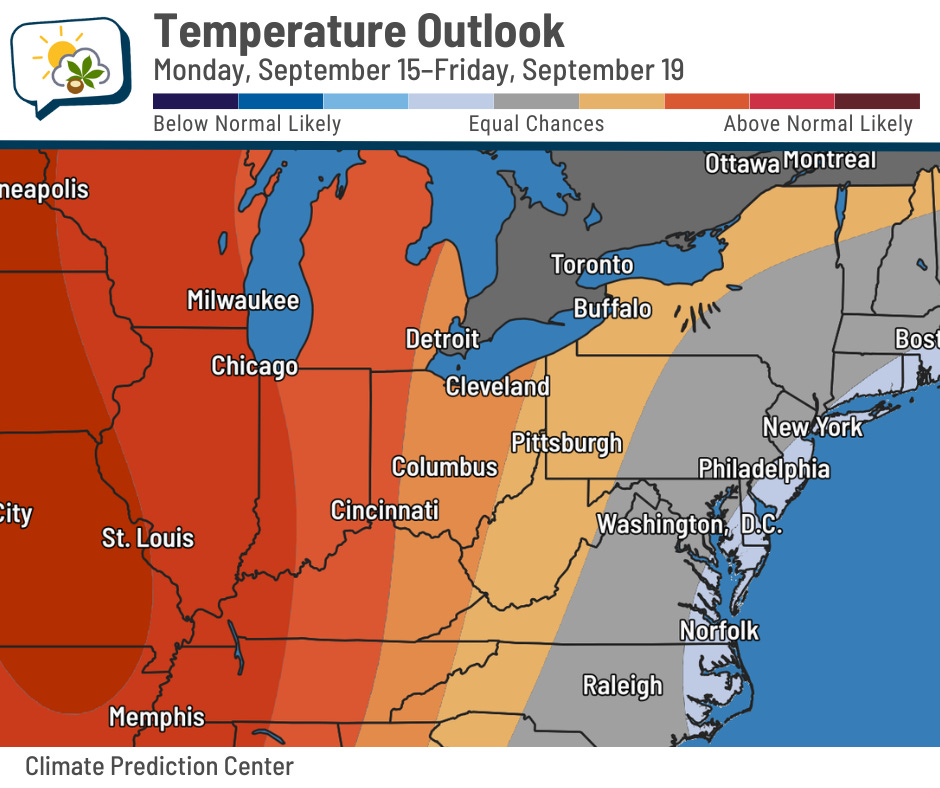
Odds certainly lean to warmer-than-average temperatures.
The warmth won’t bring rain, though.
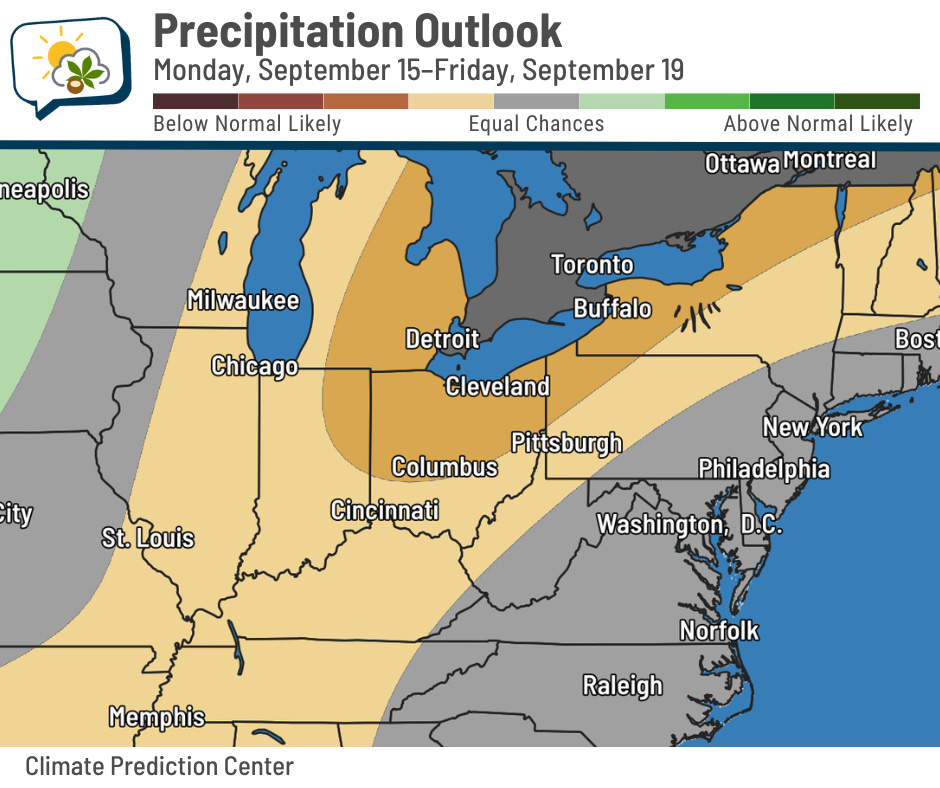
Yep, odds favor below-average rainfall next week, too.
“Warm and dry” is, without a doubt, the theme of our weather pattern for a while. A very lackluster disturbance this weekend brings a very lackluster chance of very lackluster rainfall.
I’ll share the weekly Drought Monitor update in tomorrow’s newsletter.
📊 Today’s almanac
Normal low/high: 58 / 80
Record low/high: 39 (1917) / 96 (1895)
Sunrise/set: 7:09 a.m. / 7:46 p.m.
🏖️ Summer heat leaks into fall
Extended summers are like extended warranties… hot air that most people probably don’t really want.
Summer warmth is lasting later into the fall in 227 out of 246 major U.S. cities analyzed, according to a study released by Climate Central.
Columbus is one of those cities. While the last 80-degree day of the season varies from year to year, they found that it’s trended five days later than it did about 50 years ago.
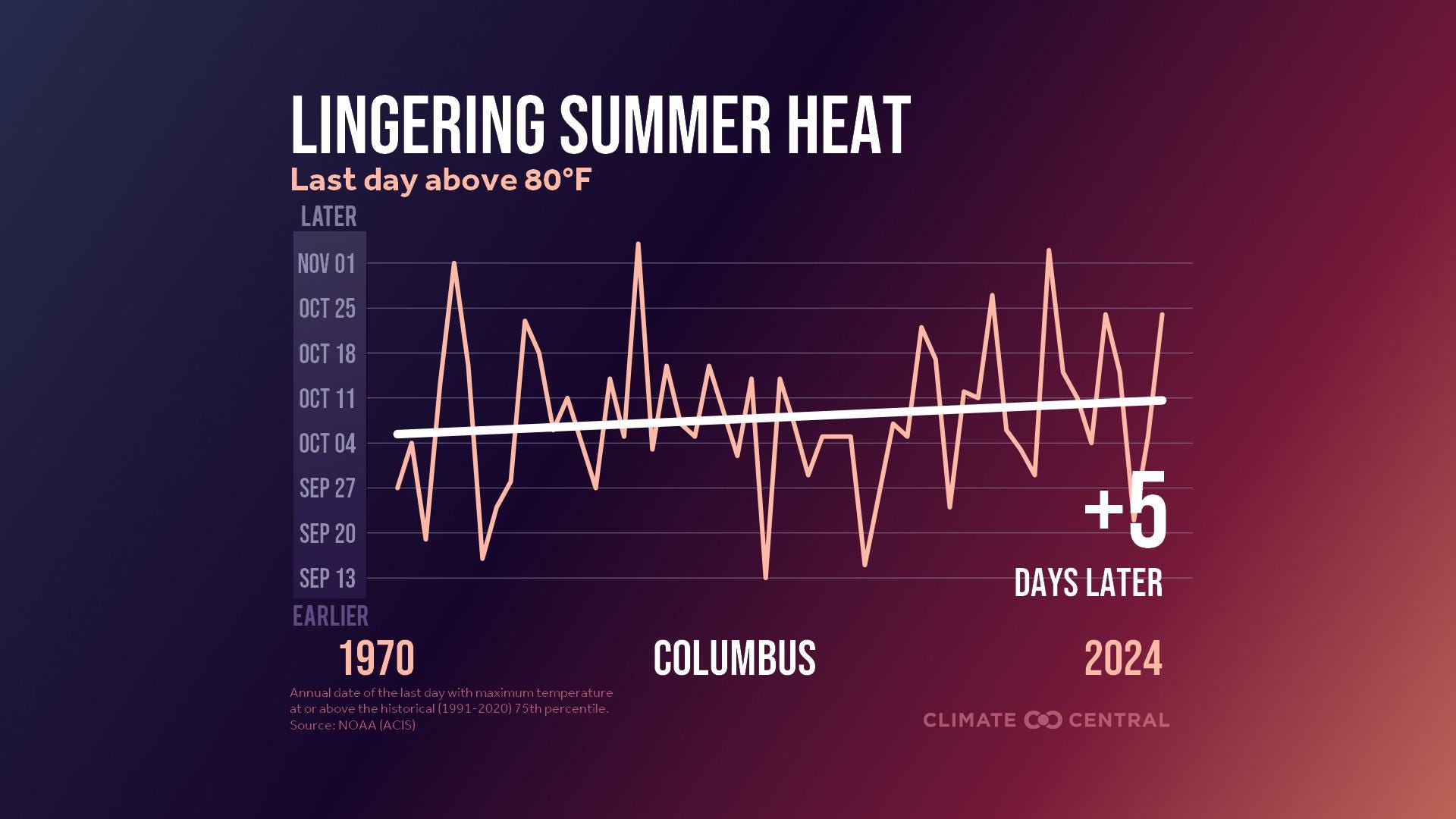
Columbus is doing better than the national average, which is 10 days. And Climate Central’s study found that about one in five cities have seen the summer heat trend later into fall by at least two weeks.
For places like Ohio, the main effects are continued demand for cooling as our A/Cs run longer, as well as longer growing seasons that can lead to more allergy issues.
🌭 For the weather weenies
-
Disaster experts call for an extreme weather safety board (Climatewire)
-
A new hurricane rating system could communicate impacts better, helping more people prepare sooner, study says (The Weather Channel)