
The 614cast
Today’s tl;dr
🌧️ Cloudy with rain eventually developing, high in the middle 50s.

Forecast highlights
☔ Rain eventually slides in
The forecast models are, overall, in much better agreement than they had been. The compromise was coming in about halfway between each other… actually converging toward the AI version of the main American model.
Rain lurking to our south in the morning gradually spreads northward, with the highest chance of rain coming into the afternoon and especially evening.
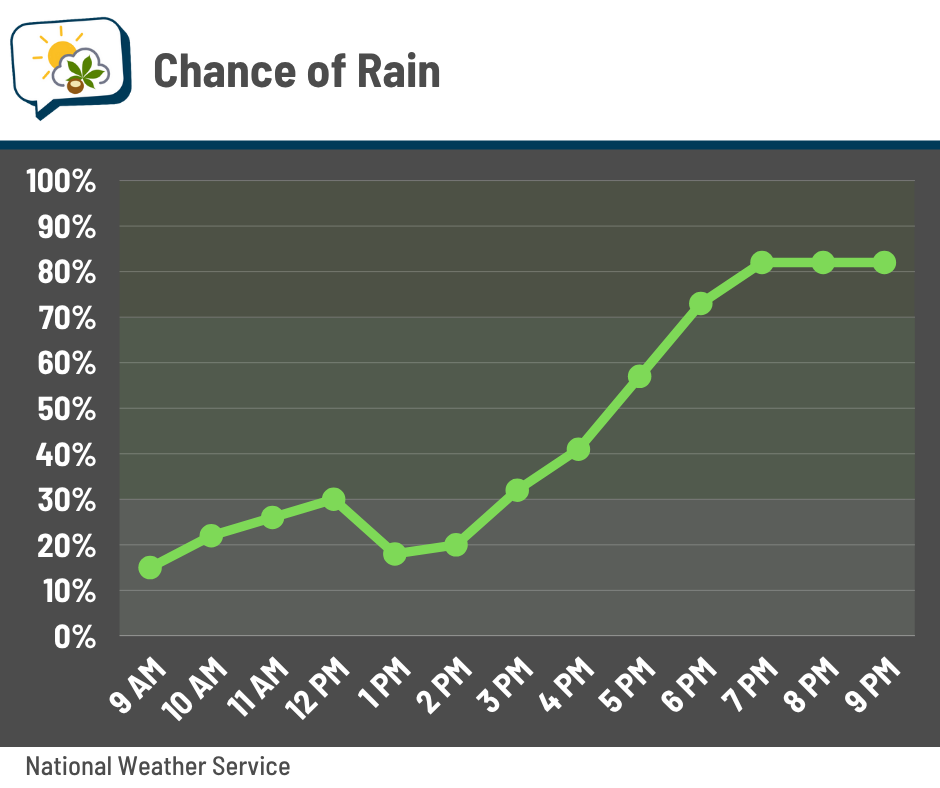
Rain exits by early Saturday.
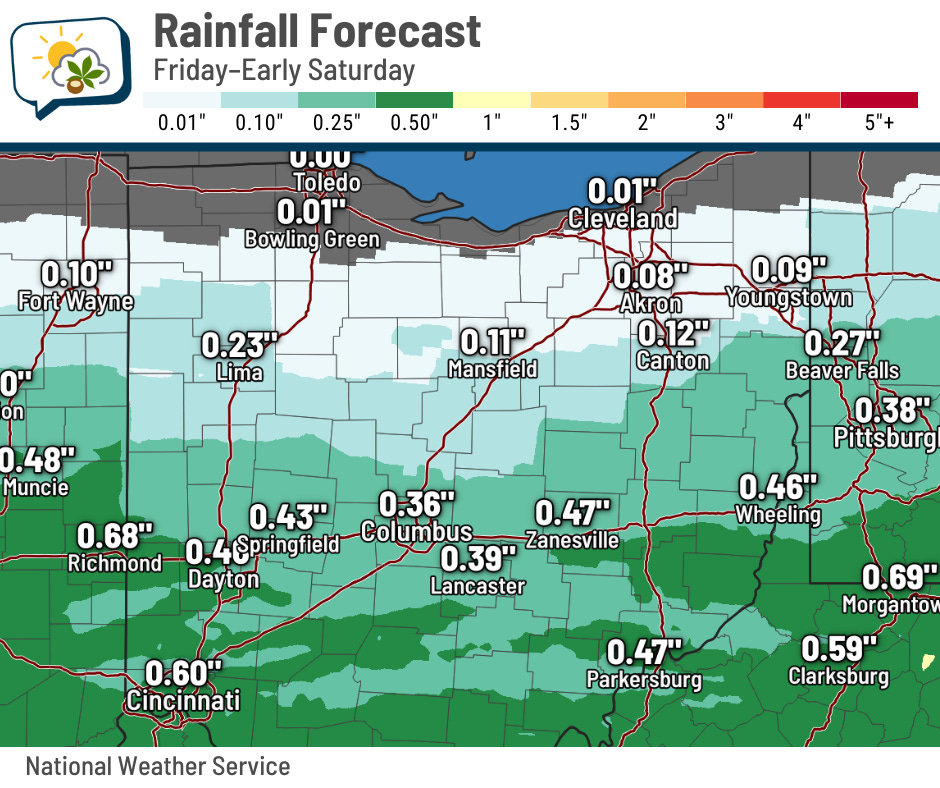
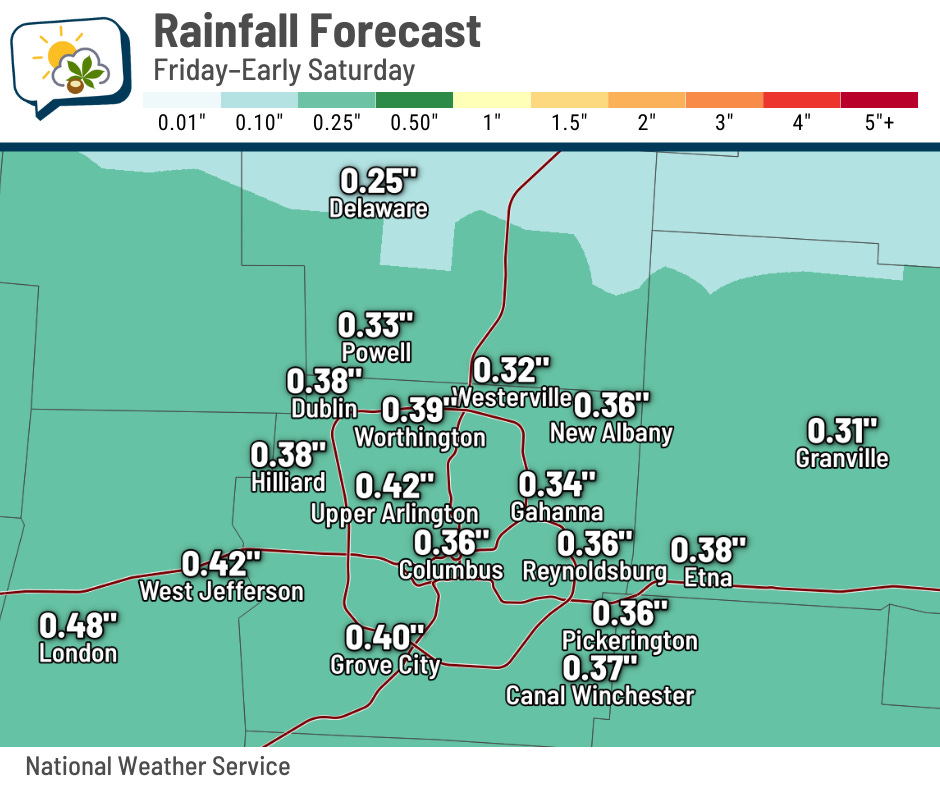
There are still differences in amounts, but at least a quarter-inch is probable. We have the potential for over a half-inch, but greater odds of that are to our south.
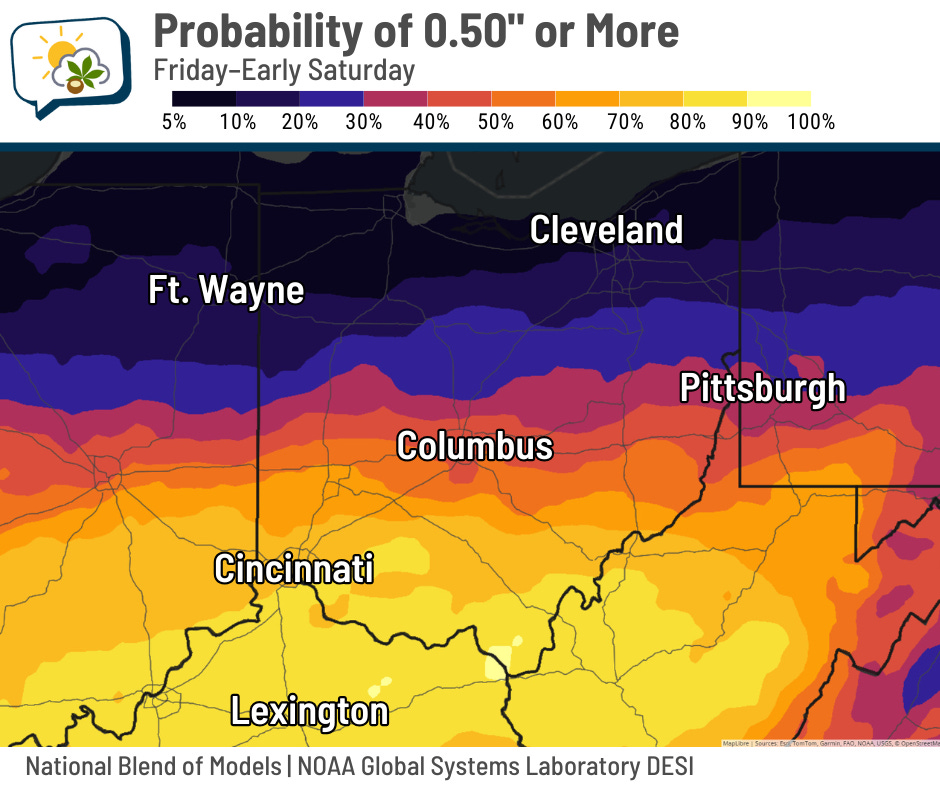
A decent cutoff may happen on the northern edge of the rain, so the metro could have some decent differences from south to north depending on how things set up.
📉 Cooldown is still almost a week away
Highs are still on track to be near to above average for most of the next week. Saturday’s 50° comes with decreasing clouds, so it actually won’t be too bad.
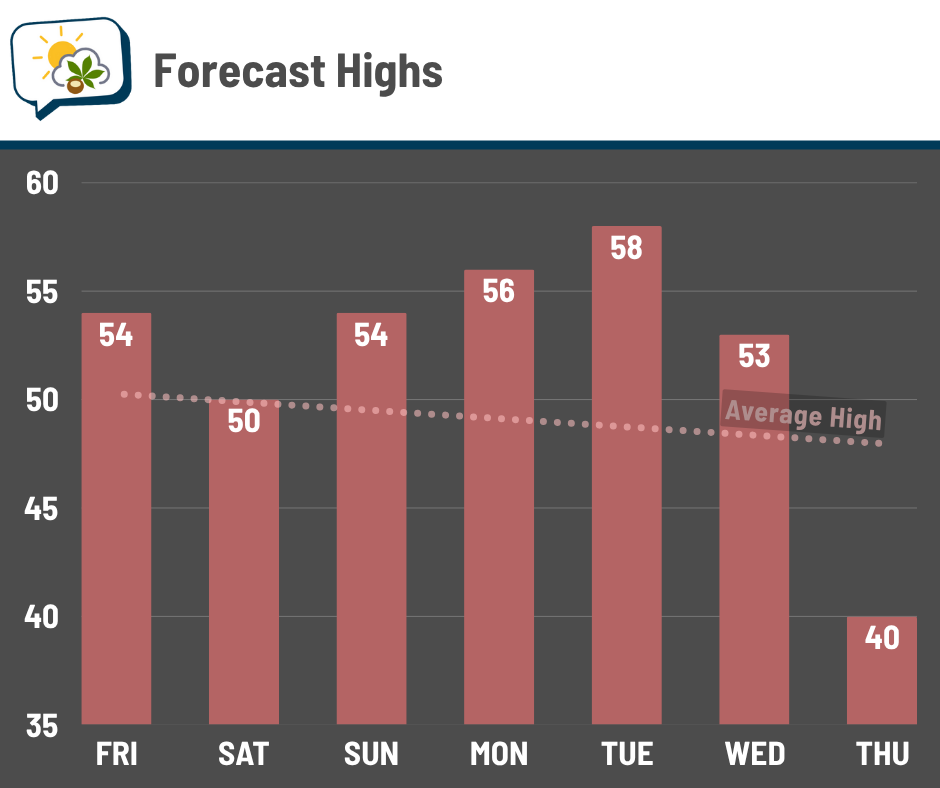
Readings climb early next week, likely peaking on Tuesday before cooler air spills in. Wednesday’s forecast high could fluctuate as there are timing differences on when the cold air comes in, but I’ll play the lower 50s for now… in any case, I have high confidence that Thanksgiving will be considerably cooler.
That midweek system will also bring a chance of rain, and perhaps a period of snow on the backside as it exits. At this time, though, I don’t expect significant local travel disruptions.
📊 Today’s almanac
Normal low/high: 33 / 50
Record low/high: 5 (1880) / 73 (1934)
Sunrise/set: 7:24 a.m. / 5:11 p.m.
⛄ Winter solstice is a month out
The winter solstice happens on December 21 at 10:03 a.m. ET. At that time, the sun’s most direct rays will reach their southernmost point, the Tropic of Capricorn.
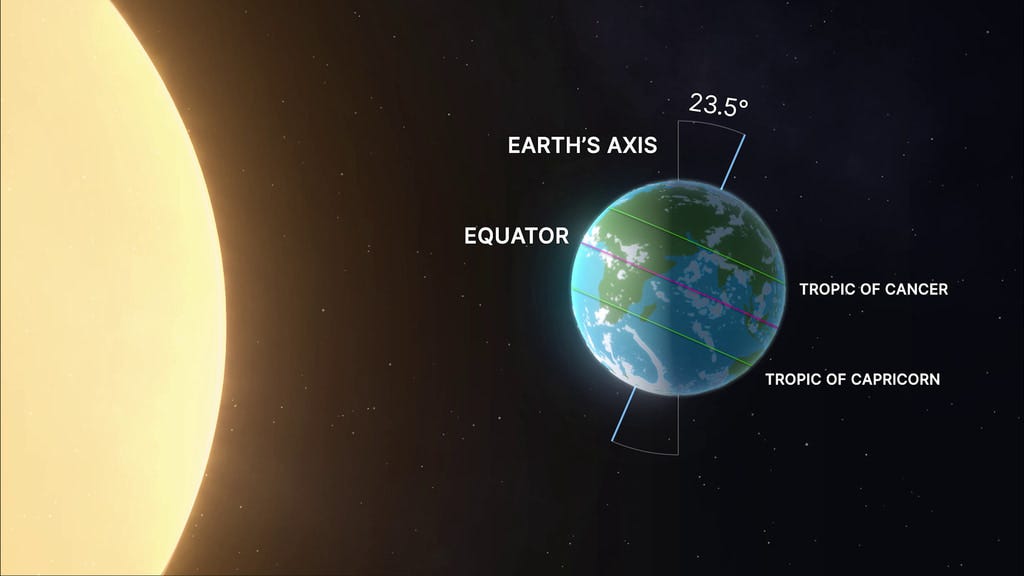
That is our shortest day of the year, with 9 hours, 19 minutes, and 55 seconds of daylight. After that, we’ll start gaining light again.
Today’s daylight length is 9 hours, 47 minutes, and 8 seconds. That means we lose a little more than 27 more minutes of light over the next month.
The length of daylight on the winter solstice is 5 hours, 41 minutes shorter than the summer solstice in June.
💬 Follow me on social
🌭 For the weather weenies
-
A climate ‘shock’ is eroding some home values. New data shows how much (New York Times)
-
NWS confirms previously undocumented EF2 tornado in Alabama’s April 15, 2011, outbreak (WVTM)
-
NWS detailed statement on previously undocumented Alabama tornado (Iowa Environmental Mesonet)